
INITIAL EXPLORATION
1981-1990
UPGRADING
AND TRANSFORMATION
1991-2000
NATIONWIDE FITNESS
ACTIVITIES
2001-2010
NATIONAL
MOST POPULAR SPORT
2011-2025
The Inaugural Race
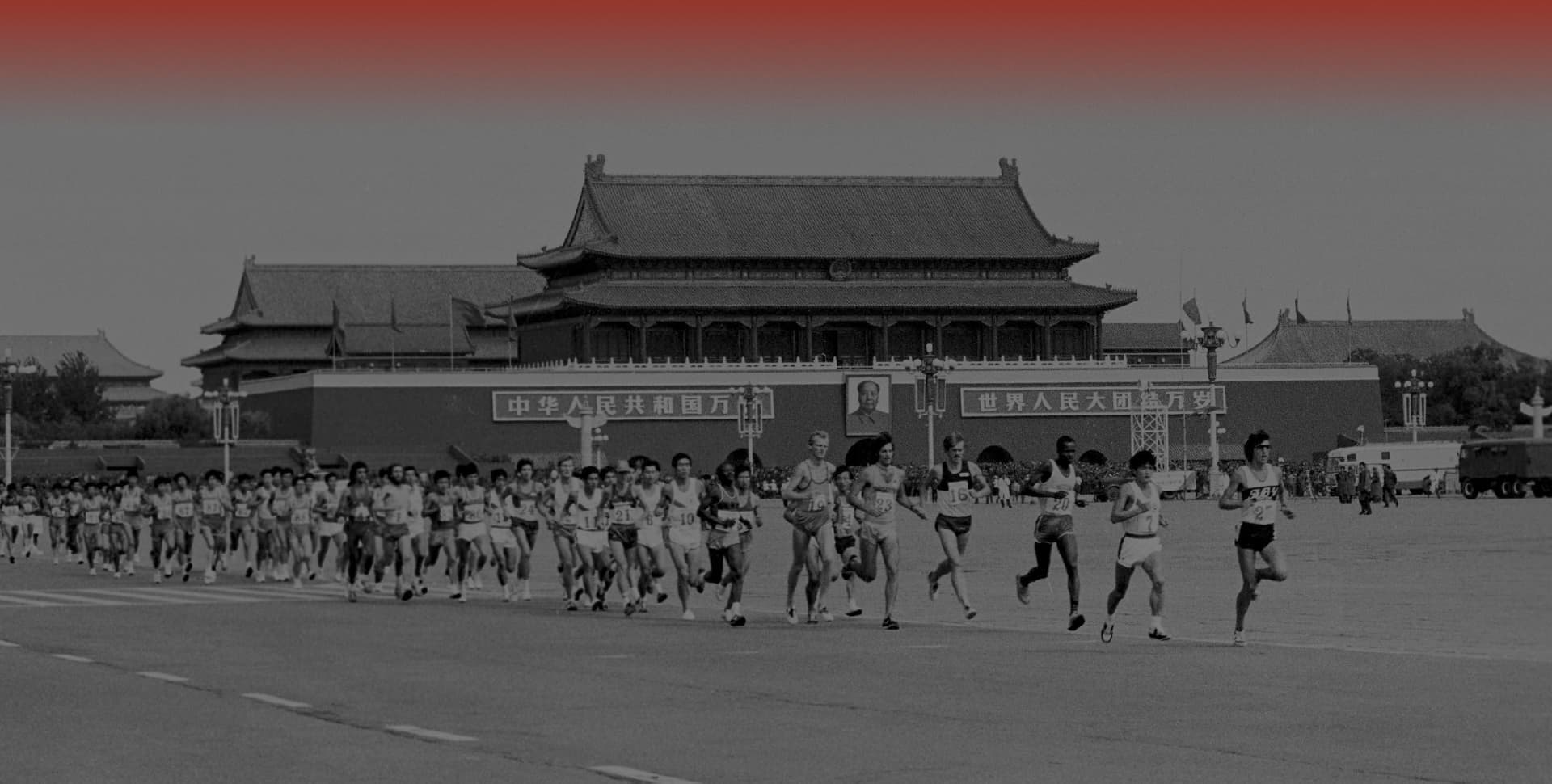
1981 was a pivotal year in China's sports history, witnessing a series of well-known major events. In that year, the Chinese men’s volleyball team represented Asia at the 4th FIVB Men’s World Cup, while the Chinese women’s volleyball team claimed its first world championship at the 3rd FIVB Women’s World Cup held in Japan. It was also in 1981 that the marathon, one of the longest-standing events in the sports field, was held in Beijing for the first time.
The race kicked off at Tian’anmen Square on 27 September 1981. The course started from Tian’anmen Square, passed through Xidan and Wukesong, turned back at Gucheng, and finally returned to Tian’anmen Square. The event’s logo, shaped like a commemorative medal, and the hand-drawn full-course course map all bear the marks of that era. A total of 86 athletes from 12 countries and regions, including Chinese participants, registered for the race, which only featured the men’s marathon. In the end, the championship was won by Swedish athlete Kjell-Erik Stahl with a time of 2:15:20. The best performance among Chinese athletes was achieved by Peng Jiazheng from Yunnan, who finished with a time of 2:26:03.
Entering The Global Stage
The 2nd Beijing International Marathon was approved as a regular international event by the International Association of Athletics Federations (now World Athletics). It followed the same course as the inaugural edition: starting from Tian'anmen Square, passing through Xidan and Wukesong, turning back at Gucheng, and finally returning to Tian'anmen Square. Similarly, the event only featured the men’s marathon.
The number of participating countries increased to 19, and the number of registered athletes rose to 195, including 42 invited and foreign athletes, as well as 153 domestic athletes. Eventually, 181 athletes took part in the race, and 137 of them completed the full course within the specified time.
A Change In Venue
The course of the 3rd Beijing International Marathon was adjusted: the starting point was changed from Tian'anmen Square to another landmark in Beijing – the Beijing Workers' Stadium. Athletes set off from the Stadium, ran south to Jianguomen Bridge, then followed Chang'an Avenue past Tian'anmen Square and Gongzhufen to Beijing Foreign Studies University. After that, they turned back at Gongzhufen and returned to the Beijing Workers' Stadium via Hepingmen, Chongwenmen, and Jianguomen.
It was also in this year that Shan Changming, the first Chinese male athlete from Inner Mongolia Autonomous Region, entered the top 10. He finished 8th with a time of 2:26:28.
Reaching New Heights
As the race's influence continued to grow, it attracted an increasing number of top athletes from around the world. At the 4th Beijing International Marathon, Japanese athlete Kita Hideki improved the race record to 2:12:16. Zeng Chaoxue, a male athlete from Yunnan, China, claimed an excellent 3rd-place finish for the first time with a time of 2:15:11 – in fact, a total of 3 Chinese athletes secured spots in the top 10 in this edition.
Additionally, the "Sports Development Award" was established for the first time in this race, and 49,999 lottery tickets were sold to spectators.
The Soh Twins
In 1985, the renowned Japanese marathon brothers, Soh Takeshi and Soh Shigeru, made their debut. Right from the start of the race, the twins showcased their exceptional prowess, alternating in the lead with a seamless rhythm. They finished side by side in a dramatic finish, clocking 2:10:23. The race officials ruled that Shigeru, the younger brother, had edged out his sibling at the finish line tape, etching their names into marathon lore.
Officially Certified
In 1986, the overall performance of the race improved significantly: a total of 8 athletes finished within 2 hours and 10 minutes, and the top four all broke the Beijing International Marathon’s previous record. Tamao Kodama, the Japanese athlete who claimed first place, even set a new course record for the Beijing International Marathon and a world’s best time in men’s marathon at that time with a result of 2:07:35. This record remained unbroken in the subsequent 27 editions of the Beijing International Marathon.
Zhu Shuchun, an athlete from Shandong, China, also broke the national record with a time of 2:13:15. Notably, starting from this edition, the Beijing International Marathon course was recognized as a "qualified course" by the International Marathon Association. John Ivor Disley, a marathon course measurer from the International Marathon Association, stated at the time: "This course has the fewest turns and the flattest road surface in the world."
Worldwide Prestige
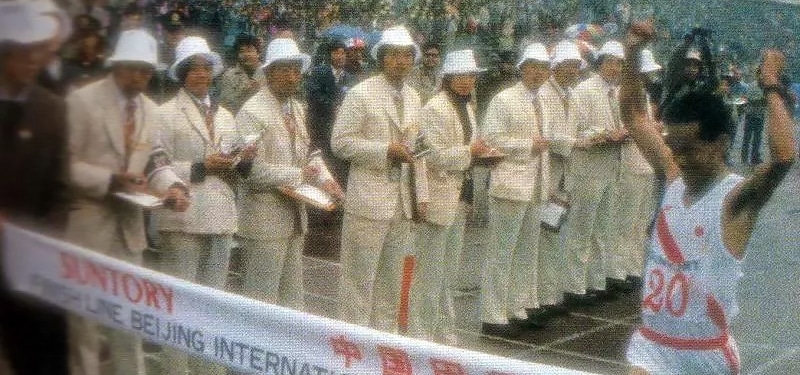
On 18 October, 1987, the athletes of the Beijing International Marathon demonstrated extraordinary perseverance despite poor weather conditions, and the competition was extremely fierce. Tanzanian athlete Ikangaa fell during the race and scraped his left knee, but he endured the pain to catch up with the leading group. At the 40-kilometer mark, he pulled ahead decisively and won the championship with a time of 2:12:19, ending the three consecutive championships of Japanese athletes. The performance of the 7th Beijing International Marathon and its participants elevated the event to a first-class international competition that attracted attention from the global sports community. It was also listed by international media among the world’s prestigious marathons.
The African “Contingent”
If the tenacious championship win by Tanzanian runner Ikangaa in 1987—alongside other African athletes—marked the "emergence" of the African contingent on the Beijing International Marathon stage, then the 1988 race saw Ethiopian runner Abebe equal the Beijing International Marathon’s best time of 2:07:35 (set by Japan’s Taisuke Kodama in 1986), which served as the "official debut" of the African contingent as a force to be reckoned with at the event. Abebe’s time was also recognized by the International Association of Athletics Federations (IAAF) Road Running Commission at the time as the fifth-fastest men’s marathon time in the world.
The 1987 and 1988 editions of the Beijing International Marathon truly opened Chinese spectators’ eyes to the strength of the "African contingent" in long-distance running.
Women's Debut
The 1989 Beijing International Marathon marked a milestone in its history: in the 9th year since its founding, the women’s marathon event was introduced for the first time with a total of 19 female athletes participating. The women’s championship was claimed by North Korean athlete Mun Gyong Ae, who finished with a time of 2:27:16. Chinese female athletes delivered outstanding performances, securing 6 out of the top 10 positions in the women’s category. It was also in this year that the Beijing International Marathon was ranked among the world’s top 10 renowned marathons.
A Breakthrough for China
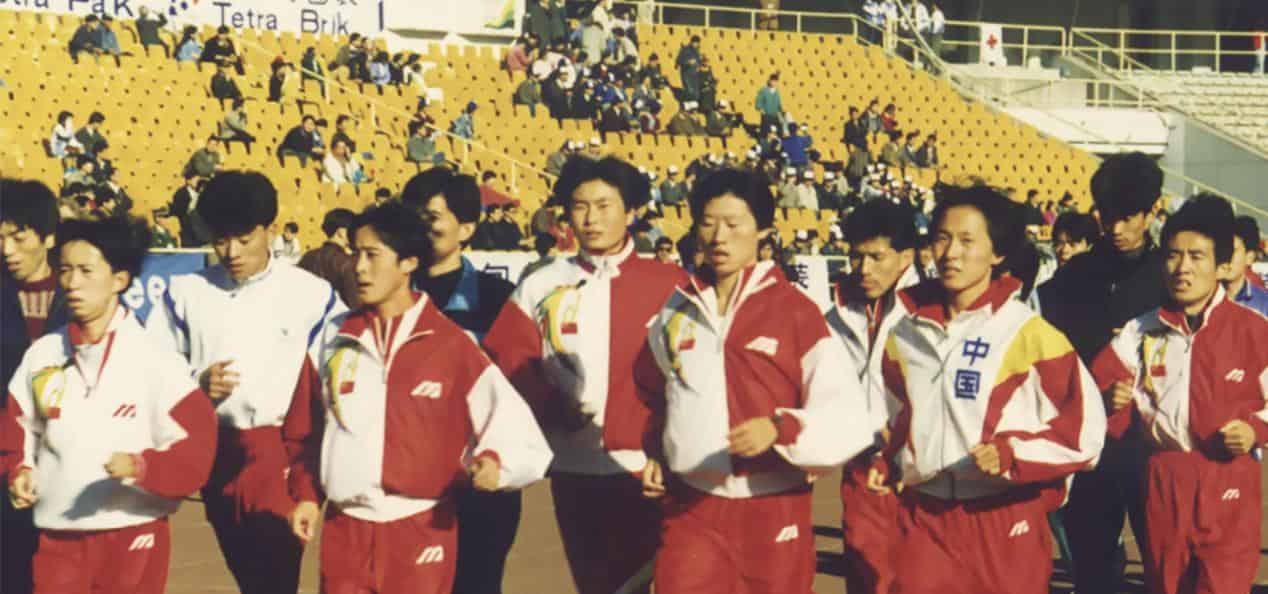
In 1990, Chinese women's marathons hit a high note. At the Beijing Asian Games, Jiangsu Province's Zhao Youfeng clinched the women's marathon gold, becoming the first Chinese athlete to win this prestigious title at the Games. In the Beijing International Marathon that year, Li Yemei triumphed with a time of 2:32:14, ending a decade-long wait for a Chinese champion. Meanwhile, Chinese male runner Liu Wenjun secured second place with a time of 2:15:25, showcasing the rising prowess of Chinese marathoners.
Doping Test Introduced
In this edition, Ethiopian runner Negash Dube and British runner Deborah Noy clinched the men's and women's titles, respectively. Prizes were introduced for the first time, both for rankings and special achievements. A significant milestone was reached as doping tests were implemented, signaling a major stride toward a more professional and stringent competitive environment.
The First Extension of Cut-Off Time
In 1992, the Beijing International Marathon extended its cut-off times to welcome more runners. The 25-kilometer cut-off was stretched from 1 hour and 40 minutes to 2 hours and 10 minutes, and the 35-kilometer cut-off was lengthened from 2 hours and 20 minutes to 3 hours and 20 minutes. A total of 350 runners from 20 countries and regions signed up. Chinese women dominated their category, taking all top eight spots. Xie Lihua emerged as the champion with a time of 2:28:53, kicking off a 22-year run of Chinese women's victories. On the men's side, Chinese runner Hu Gangjun retained second place with a time of 2:12:45.
The Rise of Chinese Speed
From 1993 to 1995, Chinese runners dominated both the men’s and women’s races at the Beijing International Marathon, showcasing what came to be known as “Chinese Speed” to the world. In the men’s event, Hu Gangjun claimed his first victory in 1993, setting a new national marathon record with a time of 2:10:57. He successfully defended his title in 1994, improving his personal best by one second.
In the same year, Chinese marathoner legend Wang Junxia, dubbed the "Oriental Deer", won the women’s race with an impressive time of 2:31:11. Chinese female runners swept the top 9 positions that year. In 1995, Chinese athletes once again claimed both men’s and women’s titles, further cementing the nation’s dominance in the event.
Mass Participation
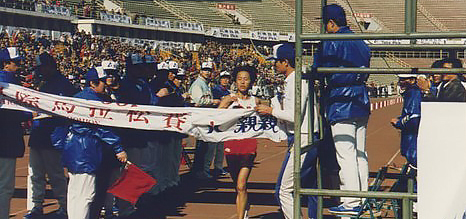
Between 1995 and 1996, the Beijing International Marathon began exploring the concept of a mass-participation race.
In 1995, the number of participants surpassed one thousand for the first time, and the event opened its doors to a wider community of long-distance running enthusiasts by introducing a 10-kilometer race.
In 1997, the marathon cut-off time was extended to 3 hours and 30 minutes, marking a significant step toward greater inclusivity.
By 1998, the race fully embraced mass participation. The marathon cut-off was further extended to 5 hours, and new events were added, including men's and women's half marathons, a mini marathon, and the 10-kilometer race — bringing the total to eight events. The number of participants surged to 19,572. And for the first time, the race was broadcast live on television using aerial footage from a helicopter.
Back to Tian'anmen Square
In 1999, to mark the 50th anniversary of the founding of the People’s Republic of China, the Beijing Marathon returned to Tian'anmen Square as its starting point. The course took runners along Chang’an Avenue, through Financial Street and past the Diaoyutai State Guesthouse, before heading north through Zhongguancun and finishing at the National Olympic Sports Center. A total of 2,718 runners from 34 countries and regions took part, with 698 completing the marathon within the cut-off time (621 men and 77 women). Japanese runner Kenichi Suzuki won the men’s title in 2:11:33, while Chinese women continued their dominance by sweeping the top three places.
Upgrades and Optimization
As the 21st century began, the Beijing International Marathon, now in its 20th year, continued to evolve and improve. In 2000, the race lineup expanded to include not only the men’s and women’s marathons but also half marathons, 10 km and 5 km races, and wheelchair half marathons and marathons—a total of 12 events, making it the most comprehensive edition in the race’s history. In 2001, the wheelchair marathon was removed, and for the following years, the race settled into a core lineup of four main events: marathon, half marathon, 10 km race, and mini marathon.
Beyond the evolving race categories, the course also underwent several adjustments. In 2000 and 2001, the race started from Tian'anmen Square, passed along West Chang’an Avenue, and moved south from the west side of Fuxingmen Bridge onto the Second Ring Road. It continued via Guang’anmen Bridge and Caihuying Bridge (finish of the 10 km race), turned west onto the West Third Ring Road, and headed north through Lize Bridge, Liuli Bridge, and the north of Huayuan Bridge (finish of the half marathon). The course then entered the North Third Ring Road via Suzhou Bridge, passed Sitong Bridge, Jimen Bridge, Anzhen Bridge, and Heping East Bridge, before heading southeast along the East Third Ring Road, turning south under Changhong Bridge, and finishing at Chaoyang Park. (In 2001, Chaoyang Park was confirmed as a candidate venue for the beach volleyball competition of the Beijing 2008 Olympic Games.)
In 2002, the course underwent a major revamp. The start remained at Tian'anmen Square, but the finish was shifted to the National Olympic Sports Center Stadium. The course traversed landmarks such as Chang’an Avenue, Diaoyutai, Hangtian Bridge, the Kunyu River, the University Olympic Village, and the Asian Games Village. The overall course was flat and picturesque, and it remained largely unchanged for the next five editions of the Beijing International Marathon.
Chip Timing Introduced
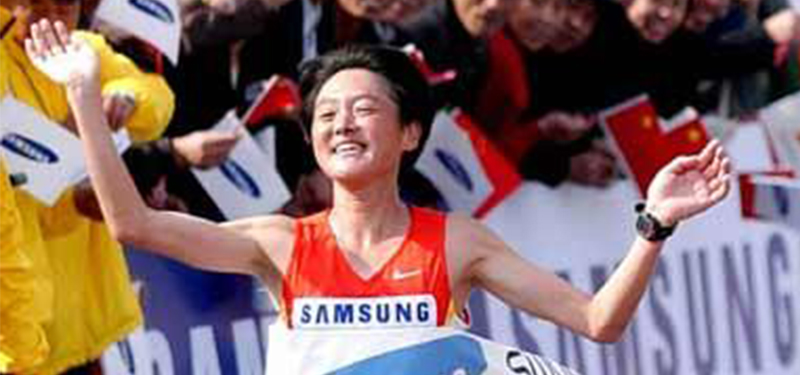
In 2003, the Beijing Marathon adopted chip timing for the first time. Participation surpassed 20,000 (20,181 in total), including 3,157 marathon runners (2,788 men and 369 women). A total of 1,902 runners (1,719 men and 183 women) finished within the cut-off time. To encourage record-breaking performances, the prize money for breaking the course record was raised to $42,195 for men and $30,000 for women. Chinese women swept the top 10 places, with Sun Yingjie winning in 2:19:39. Her performance set a new Beijing International Marathon course record that still stands today and ranked as the second-fastest women’s marathon time in the world that year.
Steady Growth
From 2004 to 2006, the Beijing Marathon maintained a stable event lineup and course while steadily improving the overall race experience. Registration increased year by year, surpassing 25,000 at its peak, with marathon entries exceeding 5,000 for the first time.
In 2006, Kenyan runner James Kwemoi Kipsang, competing in Beijing for the first time, won the men’s title in 2:10:36, narrowly defeating his compatriot Mandago. In 2005, Sun Yingjie claimed her third consecutive women’s title. In 2006, Sun Weiwei extended Chinese women’s winning streak, capturing victory in 2:34:41 — the 15th straight Beijing International Marathon women’s crown since 1992.
For the Olympics
With the nation abuzz with Olympic fever in 2007, the Beijing International Marathon fine-tuned its course to better showcase Beijing’s Olympic look and feel. The race started from the National Olympic Sports Center, passing by the Yuan Capital City Wall Relics Park, the Bird’s Nest, the Water Cube, and the venues for field hockey and archery, before finishing back at the sports center. This course offered runners a panoramic view of Beijing’s major Olympic venues.
The standout performance came from 20-year-old Ren Longyun of Qinghai Province, who ran an impressive 2:08:15. Although he finished second, just six seconds behind Kenyan runner Nephat Kinyanjui, his performance set a new record for Chinese men at the Beijing International Marathon.
The First Gold Label
Following the 2008 Beijing Olympics, the Beijing Marathon’s starting line returned to Tian'anmen Square. The course went along West Chang’an Avenue, Capital Indoor Stadium South Road, North Fourth Ring Road, and Olympic West Road, passing the Bird’s Nest, the Water Cube, and the northern Olympic venue cluster, before finishing at the southwest gate of the National Olympic Sports Center.
A historic milestone came as the 28th Beijing Marathon was awarded the prestigious IAAF Gold Label, becoming one of only eight Gold Label marathons worldwide at the time. This edition also set new records, with 49 participating countries and regions and the largest-ever marathon field: 8,564 entrants (7,085 men and 1,479 women).

A New Identity
In 2009, the Beijing International Marathon introduced a new course. Starting from Tian'anmen Square, it passed through Financial Street, the Diaoyutai State Guesthouse, the Kunyu River, Zhichun Road, Xueyuan Road, and Olympic Forest Park, before finishing at the National Olympic Sports Center. The course connected many of Beijing’s iconic landmarks, with the mix of old and new cityscapes becoming its defining feature.
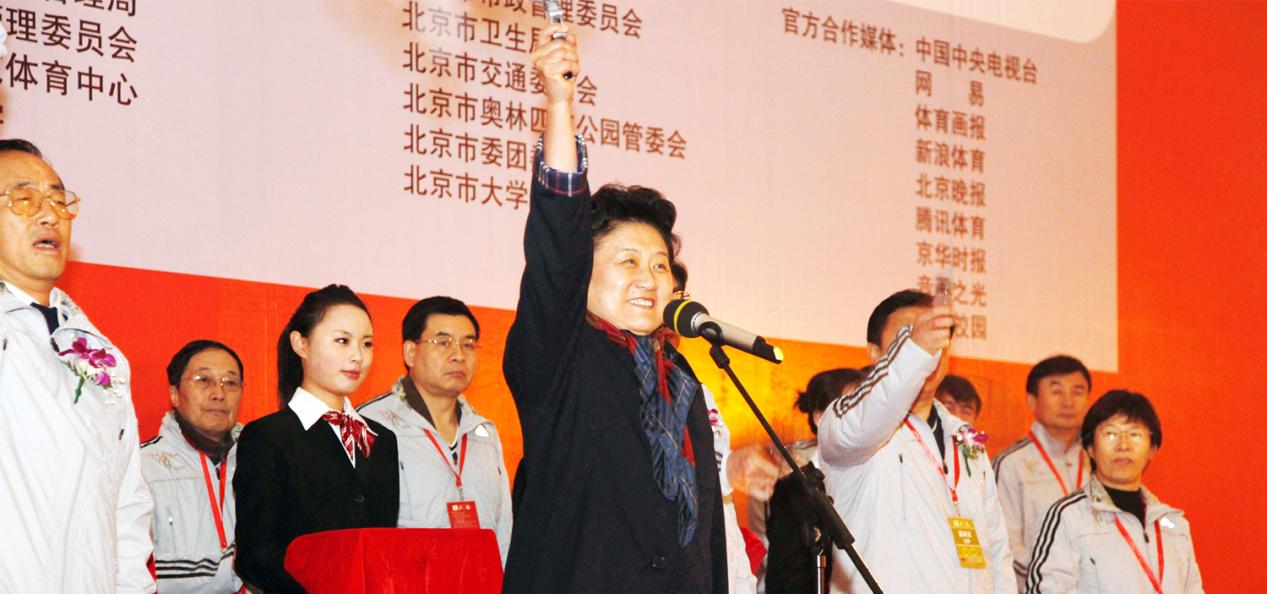
In 2010, the “Beijing International Marathon” was officially renamed the “Beijing Marathon,” accompanied by the launch of a new branding and visual identity.
Running for Charity
In 2011, the Beijing Marathon moved its finish line to Celebration Plaza in the Olympic Park Central Area (Landscape Avenue) and extended the marathon cut-off time to 6 hours. A new “parent-child run” was launched for children under 13, allowing families to participate together and share the joy of sport.
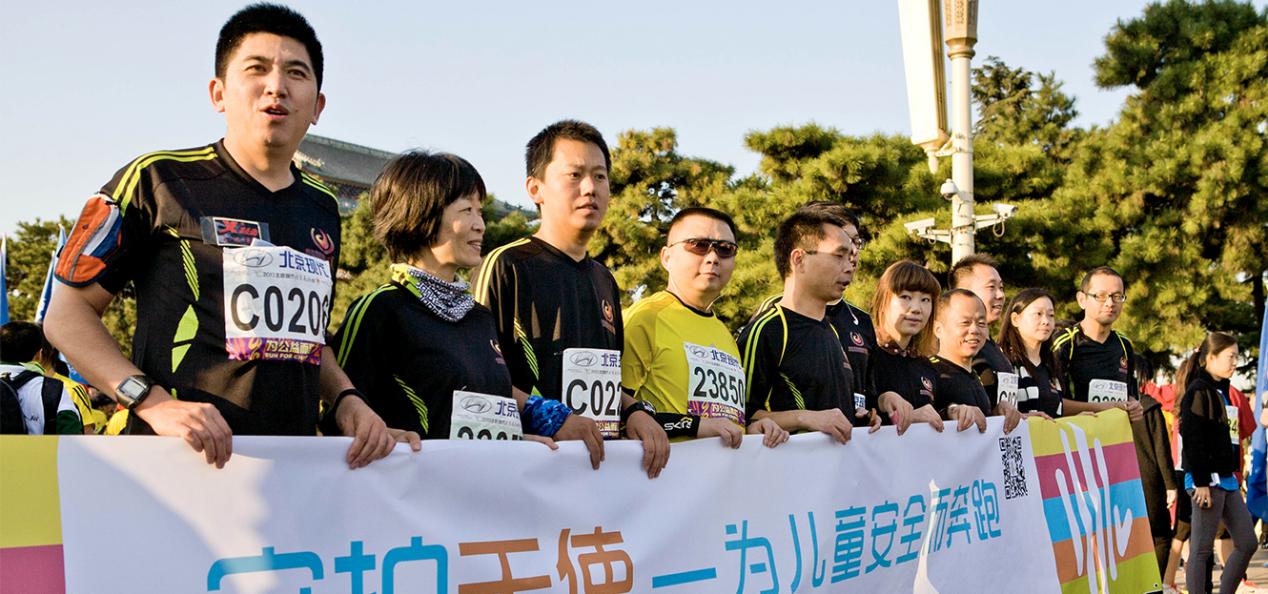
The race also introduced the new “Running for Charity” model in China, with 13 organizations—including the China Green Foundation, the China Women’s Development Foundation, and the China Children and Teenagers’ Fund—participating to highlight social responsibility.
Increased Prize Money
On 25 November 2012, the 32nd Beijing Marathon was held. The 9-kilometer event was canceled, and the marathon field expanded to 12,000 runners. The half marathon and mini marathon drew 8,000 and 10,000 participants, respectively. All 30,000 spots were filled within just 94 hours. Prize money was also increased, with the winner’s award raised to $40,000 and additional increases for third through fifth place. The race was broadcast live via satellite to the U.S., Europe, and multiple other countries.
Chinese Women’s 22-Year Winning Streak
In 2013, the marathon cut-off time was extended to 6 hours and 30 minutes. The race saw a remarkable breakthrough in performance. Ethiopian runner Tadese Tola Woldegiorgis won the men’s title in 2:07:16. Kenyan athletes took second and third place with times of 2:07:18 and 2:07:19, all breaking the previous Beijing Marathon record. Chinese runner Zhang Yingying won the women’s title in 2:31:19, marking the 22nd consecutive year that Chinese women had claimed victory at the Beijing Marathon.
Draw for Entry
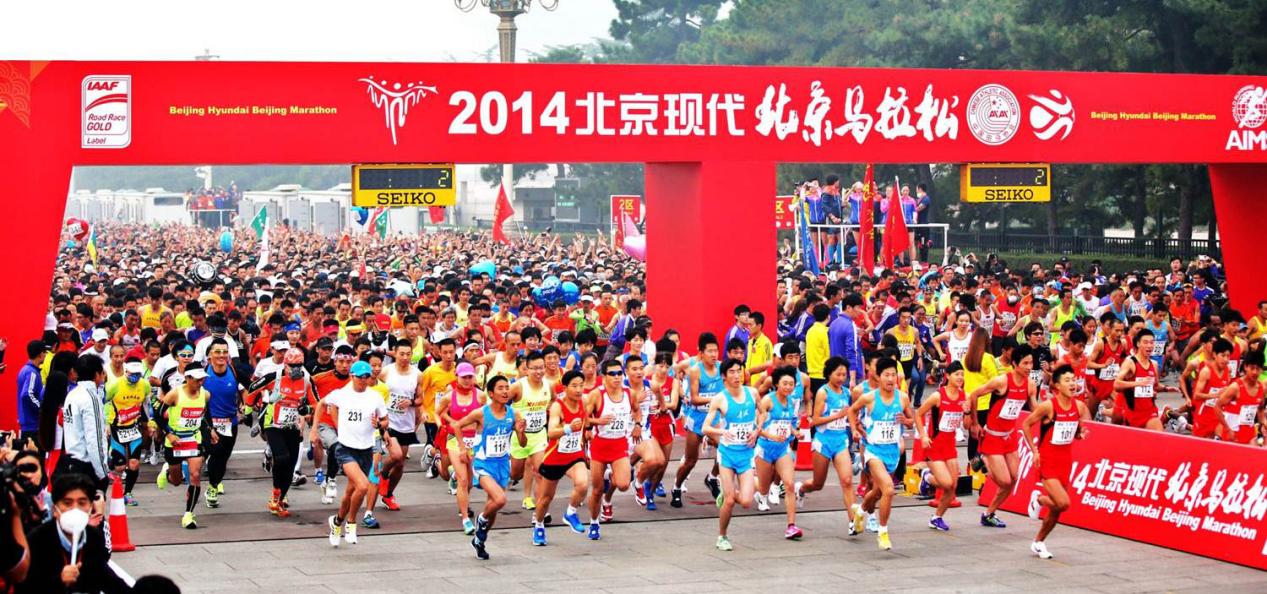
In 2014, the Beijing Marathon changed its previous single-step registration-and-payment system, splitting the process into two stages: “pre-registration” and “payment.” More than 60,000 runners signed up, and for the first time, a lottery system was used to allocate spots. The race also made major adjustments to its event lineup and quotas: the marathon was capped at 26,000 runners, the half marathon at 4,000, and the mini marathon was discontinued. The marathon cut-off time was reset back to 6 hours. In addition, the race introduced both “chip time” and “gun time” results, making outcomes more objective and fair.
Entering the Marathon Era
The 35th Beijing Marathon discontinued the half marathon, marking the official beginning of the “marathon era.” This edition saw over 60,000 registrations, setting a new domestic record for marathon sign-ups. To commemorate the 35th anniversary of the Beijing Marathon, the organizing committee, with sponsorship and design support from Luk Fook Jewellery, introduced a meticulously crafted 24K gold commemorative medal. For the first time, the Beijing Marathon received the “Popular Sportsmanship Award” at the CCTV Sports Personality of the Year ceremony.
The First Beijing Marathon Expo
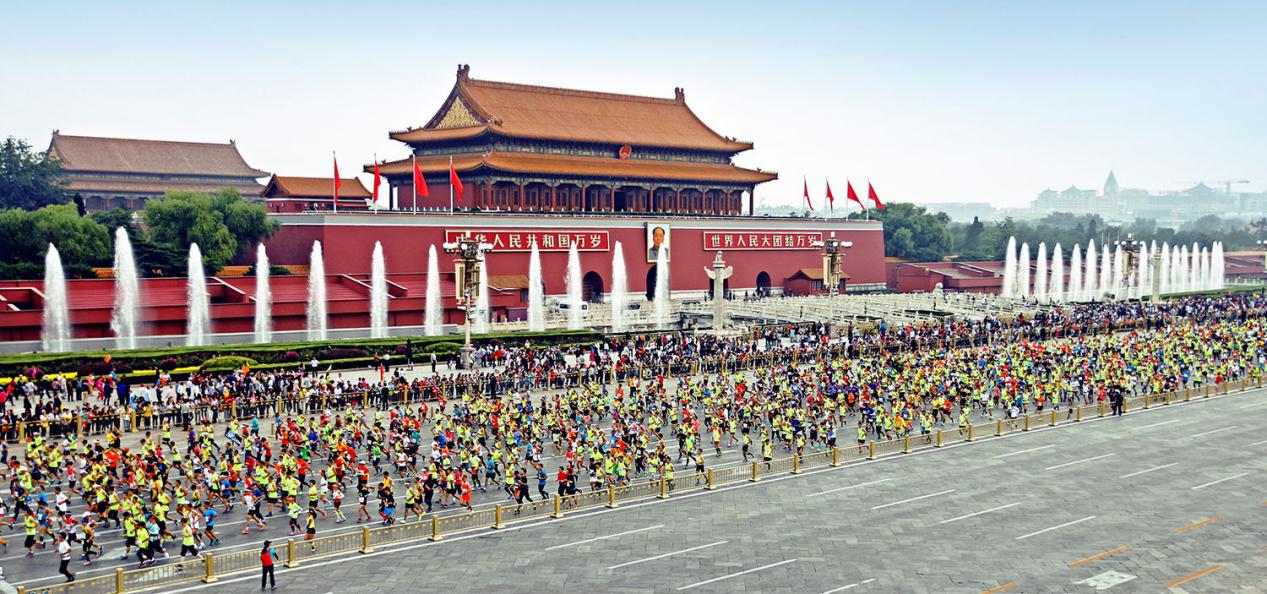
In 2016, registrations for the Beijing Marathon surpassed 66,000, with a total of 66,576 people signing up. To further improve the event system, the race launched the Beijing Marathon Expo as a brand, positioning it as both a cultural celebration and a premium platform for exhibitors to showcase and connect. The expo was held at Hall 5 of the National Convention Center from September 14 to 16, covering 6,500 square meters.
The National Marathon
In 2017, the Beijing Marathon became a member of the Asian Premier Marathons and the China Marathon Majors, and earned the IAAF Gold Label certification for the ninth consecutive year. The race achieved an impressive finish rate of 87%. Through its continued development, the Beijing Marathon has won widespread recognition in areas such as competition organization, runner services, on-site atmosphere, brand building and cultural communication, economic impact, and social contribution. It has therefore earned the title of “National Marathon”.
Supporting the Winter Olympics
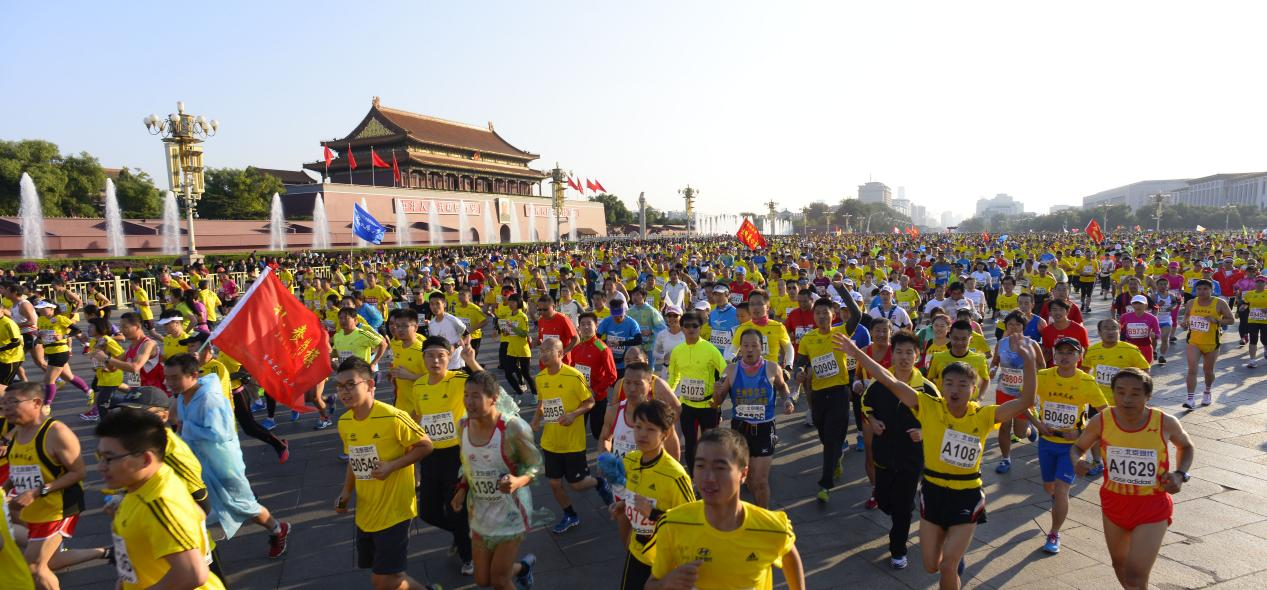
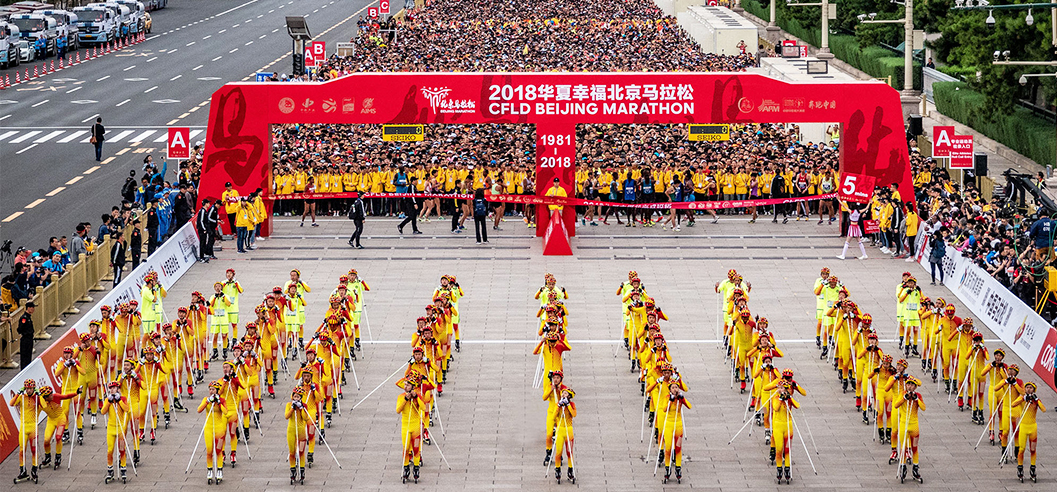
The year 2018 was of remarkable significance to the Beijing Marathon. It marked the 40th anniversary of China’s reform and opening-up, the 10th anniversary of the Beijing Olympics, and the 10th consecutive year of the Beijing Marathon’s IAAF Gold Label designation. The organizing committee advanced the event across competition systems, operations, commercial development, cultural development, and public welfare, continually enhancing service quality, expanding the brand’s influence, fulfilling social responsibilities, and keeping the event people-centered. The Beijing Marathon also partnered with the “Cheer for the Olympics” cultural campaign and the “I Want to Go to the Olympics” initiative, rallying millions of runners to celebrate reform and opening-up and to support Beijing 2022 in the spirit of China’s “National Marathon”.
New Course Record
In 2019, the Beijing Marathon coincided with the 70th anniversary of the founding of the People’s Republic of China. Registration surged to an all-time high for domestic marathons, with 165,704 runners signing up. An astounding 29,413 participants (23,539 men and 5,874 women) finished within the cut-off time, achieving a remarkable 98% finish rate. A highlight of the race came when Kenyan runner Matthew Kipkoech Kisorio broke the course record set in 2013 by Ethiopian runner Tadese Tola Woldegiorgis, finishing in 2:07:02.
The 40th Edition
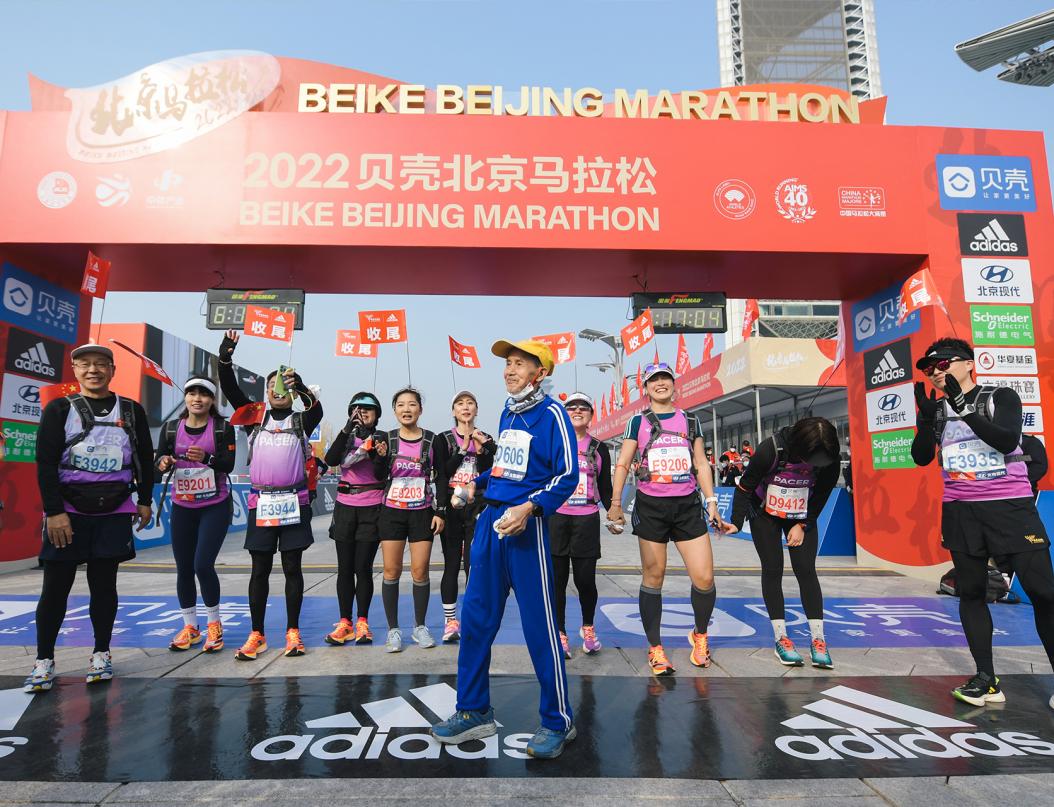
In 2022, the 40th Beijing Marathon was held as planned. The organizing committee continued to improve the event's quality, providing runners with a meticulously organized, well-serviced sporting and cultural festival combined elite competition with mass participation. The event showcased the remarkable achievements of China’s reform and opening-up, as well as the progress of its track and field and marathon development, all in the pursuit of the Chinese Dream.
Course Refinement
In 2023, the Beijing Marathon entered a new era and became a key race of the National Marathon Championship. Building on its classic course from previous editions, the race optimized the course by reducing turns and return points after the 39-kilometer mark, helping runners achieve better results. Post-race data showed that 2,402 runners finished the race under three hours, setting a new domestic record for sub-three-hour finishers at the time.
A Record year for "Sub-Three" Finishers
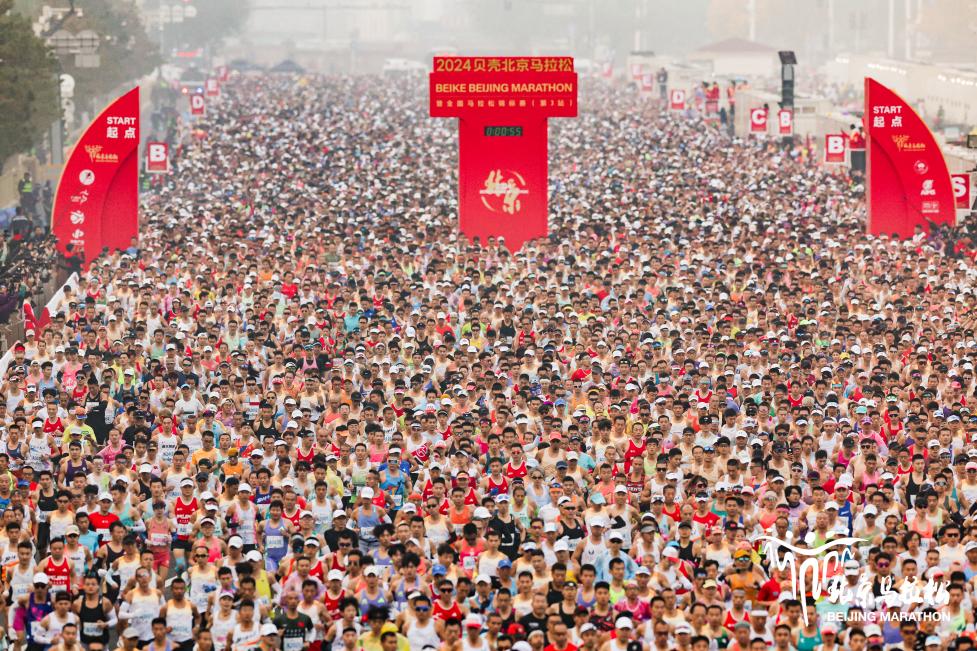
In 2024, the 42nd Beijing Marathon coincided with the 75th anniversary of the founding of the People's Republic of China, making the event especially significant. On 3 November, 30,000 runners set off from Tian'anmen Square, passing though the heart of the city and iconic landmarks such as West Chang'an Avenue, the Cultural Palace of Nationalities, and the Military Museum of the Chinese People's Revolution, before finishing at the Olympic Central Area. A record-breaking 3,004 runners completed the race under three hours. Along the 42.195-kilometer course, they experienced the ancient allure and dynamic spirit of Beijing, the "dual Olympic city", with every stride.
"Our Beijing Marathon"
In 2025, the 43rd Beijing Marathon, themed "Our Beijing Marathon", brought multiple upgrades. Instead of official‑only announcements, the press conference featured runners, volunteers and referee representatives as guest speakers, highlighting that the event belongs to every participant. The number of entries rose from 30,000 in prior races to 32,000, adding 2,000 spots for runners. The number of U-turns on the second half of the course was cut from 3 to only 1, reducing repeated back-and-forth running and helping runners achieve better results. More than 4700 runners finished within 3 hours, setting a new record.
